For a student to learn, they have to feel safe first

By Swarisha Korukonda
Guest Blogger


Swarisha Korukonda is a junior at International School in the Bellevue School District

For a student to learn, they have to feel safe first. Safe enough to raise a hand, safe enough to get an answer wrong, safe enough to have a bad day without wondering what will be done to their body because of it. Take that away and school stops being a place kids grow in and turns into a place they just try to get through. Students with disabilities and behavioral needs have felt this most acutely, because for years the response to their hardest moments has too often been control, not support.

That’s the problem House Bill 1795 was written to address.

The bill passed the House and Senate in the 2026 session, Governor Bob Ferguson signed it, and it took effect June 11, 2026. Here’s what actually changes for kids in Washington schools:

Certain restraints are banned outright: pepper spray, mace, sedatives, and physical restraints like handcuffs, zip ties, or belts are no longer allowed on students.[1] Staff can’t pin a student down or press them against a wall in a way that restricts breathing or blood flow, a tactic that has killed children in other states.[1] Isolation and restraint can only be used when a student poses an imminent risk of serious harm, not as a routine or planned intervention, and every use has to follow safety and supervision rules. The construction of new rooms built specifically to isolate students are now prohibited, and districts now have to report every restraint and isolation incident to OSPI each year, while the state funds crisis-prevention training so schools can de-escalate instead of restrain.

Nationally, schools reported more than 70,000 physical restraint incidents and more than 60,000 seclusion incidents in a single year.[2] In Washington alone, districts logged over 9,000 combined restraint and isolation incidents in 2022-23. Students with disabilities are a small share of total enrollment nationwide, but nationally they account for roughly 81 percent of restraint incidents and 75 percent of seclusion incidents.[2] That’s not an accident, and it isn’t a discipline problem either. It’s a design problem, and it’s exactly what this law is trying to undo.

No kid should learn to associate school with being pinned to the floor. No parent should have to wonder if their child spent recess locked in a padded room because a staff member never got trained on how to de-escalate instead. That was the reality for thousands of Washington students, and disproportionately so for the ones who required more patience rather than force.

As of June, that reality is illegal.

But a law only does what people make it do. HB 1795 bans the worst tools and the worst tactics, but it doesn’t ban isolation outright, it just narrows when it can be used. That’s progress, but it’s not the final result we are hoping for. The next fight is pushing to phase out isolation entirely instead of just regulating it, because a practice that’s dangerous as a routine doesn’t stop being dangerous when it’s still labeled as a last resort. None of it holds without funding backing it up. We must dedicate more resources to training and ensure district reporting is consistent and complete or this will not have the impact it needs to have. Passing HB 1795 was the fight to change the rule. Making sure districts actually follow it, prioritize training, have accurate reporting, and keep moving toward eliminating isolation for good, is the fight that’s just getting started. Washington decided its most vulnerable students deserve to feel safe at school. It’s on all of us to make sure that decision holds.

Sources

[1] Washington Political News for Families, Seattle’s Child, April 2026 — coverage of Governor Ferguson signing HB 1795: https://www.seattleschild.com/washington-political-news-for-families-key-updates-this-week-april-05-2026/

[2] U.S. Department of Education, Office for Civil Rights — restraint and seclusion data: https://www2.ed.gov/about/offices/list/ocr/docs/restraint-seclusion.html

[3] HB 1795 bill summary and status, Washington State Legislature: https://app.leg.wa.gov/billsummary?BillNumber=1795&Year=2025

[4] House Bill Report, HB 1795, House Committee on Education: https://lawfilesext.leg.wa.gov/biennium/2025-26/Pdf/Bill%20Reports/House/1795%20HBR%20ED%2026.pdf

[5] Senate Bill Report, ESHB 1795, Senate Committee on Early Learning & K-12 Education: https://lawfilesext.leg.wa.gov/biennium/2025-26/Pdf/Bill%20Reports/Senate/1795-S.E%20SBA%20EDU%2026.pdf


Love what we do? Support our work

Want to find out the latest in education news in Washington? Subscribe to our newsletter

Want to learn more about League of Education Voters? Find out here
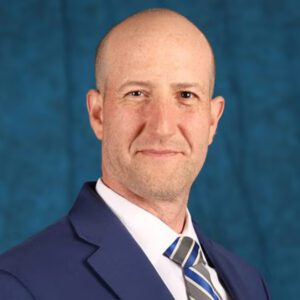
Podcast – Ben Shuldiner, Superintendent of Seattle Public Schools

In our Putting Students First podcast, we interview students, policymakers, partners, and thought leaders to spotlight education policies, research, and practices so that together we can create learning environments where every Washington student feels safe, supported, and a positive sense of belonging, so that they can achieve academically and access the life they choose.

In this episode, League of Education Voters CEO Arik Korman interviews Ben Shuldiner, Superintendent of Seattle Public Schools. Ben discusses what drives him, how he measures success for his priorities, what his strategy is for closing longstanding opportunity gaps, how he is implementing student and family engagement, what worked and what didn’t work in his personal education journey, and how he would change Washington state’s education system if he were in charge and there were no budgetary constraints.

Listen on Spotify, Apple Podcasts, Amazon Music, iHeartRadio, or Spreaker


Listen:

Read More

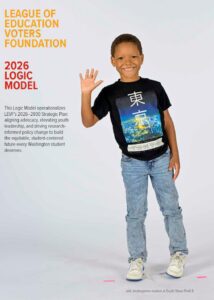
Our 2026-2030 Strategic Plan and Logic Model

Turning Vision into Action for Washington’s Students

Our logic model shows how we move from strategy to effective, measurable change.

On a typical school day, a student in Washington is navigating more than just their classes.

They might be managing anxiety without consistent access to mental health support, like the more than six in ten Washington 10th graders who report feeling anxious or nervous. They might be navigating their school year in a non-home language, like the 160,000 Washington students who are multilingual learners, or, like the 170,000 students with disabilities, trying to make their way through a system that wasn’t designed for them. They might be trying to stay engaged while moving between systems that don’t always connect, resulting in just 77% of youth from low-income households graduating on time, and only 31% of all Washington high school graduates attaining a post-secondary credential by age 26.

They might also have ideas about what would make school more relevant and about how to make the system easier and more effective, but they don’t always have a clear way to be heard.

This logic model is about connecting our collective work so that we are coordinated and aligned across Washington – from students to decision-makers – to drive positive change across our public education system. Read More

2026 Washington state Supplemental Budget Summary

By Jacob Vela, League of Education Voters Chief Policy Officer


The 2026 supplemental budget makes adjustments to the 2025-27 biennial budget and impacts funding for the remainder of the biennium, which ends in June of 2027. The amounts below are in addition to funds that have already been appropriated in the 2025-27 budget. In the final budget agreement, all amounts are per biennium unless noted.
Read More

2026 Supplemental Budget Proposal Side-By-Side

By Jacob Vela, League of Education Voters Chief Policy Officer

The Washington state House and Senate have released their 2026 supplemental budget proposals. The 2026 supplemental budget makes adjustments to the 2025-27 biennial budget and impacts funding for the remainder of the biennium, which ends in June of 2027. The amounts below are in addition to funds that have already been appropriated in the 2025-27 budget. All amounts are per biennium unless noted. Read More

Podcast – Michelle Whitney, 2026 WA Superintendent of the Year

In our Putting Students First podcast, we interview students, policymakers, partners, and thought leaders to spotlight education policies, research, and practices so that together we can create learning environments where every Washington student feels safe, supported, and a positive sense of belonging, so that they can achieve academically and access the life they choose.

In this episode, League of Education Voters CEO Arik Korman interviews Michelle Whitney, the 2026 Washington state Superintendent of the Year, who has served as Superintendent of the Pasco School District for the past 10 years. Michelle discusses what makes Pasco’s dual language, highly capable, and career technical education (CTE) programs special, what worked and what didn’t work in her personal education journey, and how she would change Washington’s education system if she were in charge and there were no budgetary constraints.

Listen on Spotify, Apple Podcasts, Amazon Music, iHeartRadio, or Spreaker


Listen:

Read More

Legislative Issue Brief: Student Homelessness

By Jacob Vela, League of Education Voters Chief Policy Officer, and Aaron Yared, Director of Policy & Advocacy at Building Changes


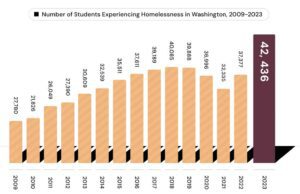
In order for students to be ready for learning, their basic physical, social, and emotional needs must be met. When these needs go unmet, students can struggle to stay engaged in school or even regularly attend school. This is especially true for students experiencing homelessness, who often don’t know where they will sleep week-to-week or if they will have access to enough food to sustain their nutritional needs.

Outside of the years of the pandemic, the number of Washington students experiencing homelessness has seen steady increases since the Office of the Superintendent of Public Instruction began monitoring the number annually.[1]


As the resources needed to support the increased needs of students experiencing homelessness have grown in recent years, state and federal supports have become increasingly uncertain. Read More

Podcast – Gabriela Whitemarsh, 2026 WA state Teacher of the Year

In our Putting Students First podcast, we interview students, policymakers, partners, and thought leaders to spotlight education policies, research, and practices so that together we can create learning environments where every Washington student feels safe, supported, and a positive sense of belonging, so that they can achieve academically and access the life they choose.

In this episode, League of Education Voters CEO Arik Korman interviews Gabriela Whitemarsh, the 2026 Washington state Teacher of the Year, who teaches Bilingual Math at Pasco High School in the Pasco School District. Gabriela discusses how her bilingual math program came to be, what outcomes and barriers she has seen for her program, what worked and what didn’t work in her personal education journey, and how she would change Washington’s education system if she were in charge and there were no budgetary constraints.

Listen on Spotify, Apple Podcasts, Amazon Music, iHeartRadio, or Spreaker


Listen:

Read More

Podcast – John B. King on the Teachers Who Change Our Lives

In our Putting Students First podcast, we interview students, policymakers, partners, and thought leaders to spotlight education policies, research, and practices so that together we can create learning environments where every Washington student feels safe, supported, and a positive sense of belonging, so that they can achieve academically and access the life they choose.

In this episode, League of Education Voters CEO Arik Korman interviews John B. King, Secretary of Education under President Obama and currently the chancellor of the State University of New York (SUNY), the nation’s largest comprehensive system of public higher education. Secretary King discusses how important it is for every student to have at least one caring adult in every school building, how we can shift mindsets so educators believe that every student can learn, what the value is of public K-12 and higher education, and how he would change our nation’s education system if there were no budgetary constraints.

Secretary King’s new book is Teacher By Teacher: The People Who Change Our Lives. Follow him on Instagram @johnbkingjr and on X @johnbking.

Listen on Spotify, Apple Podcasts, Amazon Music, iHeartRadio, or Spreaker


Listen:

Read More

Podcast – Zaretta Hammond on Culturally Responsive Teaching

In our Putting Students First podcast, we interview students, policymakers, partners, and thought leaders to spotlight education policies, research, and practices so that together we can create learning environments where every Washington student feels safe, supported, and a positive sense of belonging, so that they can achieve academically and access the life they choose.

In this episode, League of Education Voters CEO Arik Korman interviews Zaretta Hammond, author of Culturally Responsive Teaching and the Brain, about how culturally responsive teaching supports students in the classroom, how best to embed equity into education in Washington state, what worked and what didn’t work in her own education journey, and how she would change Washington’s education system if she were in charge and there were no budgetary constraints.

Zaretta’s new book, Rebuilding Students’ Learning Power: Teaching for Instructional Equity and Cognitive Justice, will be published in September. Sign up for her newsletter at CRTandTheBrain.com


Listen on Spotify, Apple Podcasts, Amazon Music, iHeartRadio, or Spreaker


Listen:

Read More