For a student to learn, they have to feel safe first

By Swarisha Korukonda
Guest Blogger


Swarisha Korukonda is a junior at International School in the Bellevue School District

For a student to learn, they have to feel safe first. Safe enough to raise a hand, safe enough to get an answer wrong, safe enough to have a bad day without wondering what will be done to their body because of it. Take that away and school stops being a place kids grow in and turns into a place they just try to get through. Students with disabilities and behavioral needs have felt this most acutely, because for years the response to their hardest moments has too often been control, not support.

That’s the problem House Bill 1795 was written to address.

The bill passed the House and Senate in the 2026 session, Governor Bob Ferguson signed it, and it took effect June 11, 2026. Here’s what actually changes for kids in Washington schools:

Certain restraints are banned outright: pepper spray, mace, sedatives, and physical restraints like handcuffs, zip ties, or belts are no longer allowed on students.[1] Staff can’t pin a student down or press them against a wall in a way that restricts breathing or blood flow, a tactic that has killed children in other states.[1] Isolation and restraint can only be used when a student poses an imminent risk of serious harm, not as a routine or planned intervention, and every use has to follow safety and supervision rules. The construction of new rooms built specifically to isolate students are now prohibited, and districts now have to report every restraint and isolation incident to OSPI each year, while the state funds crisis-prevention training so schools can de-escalate instead of restrain.

Nationally, schools reported more than 70,000 physical restraint incidents and more than 60,000 seclusion incidents in a single year.[2] In Washington alone, districts logged over 9,000 combined restraint and isolation incidents in 2022-23. Students with disabilities are a small share of total enrollment nationwide, but nationally they account for roughly 81 percent of restraint incidents and 75 percent of seclusion incidents.[2] That’s not an accident, and it isn’t a discipline problem either. It’s a design problem, and it’s exactly what this law is trying to undo.

No kid should learn to associate school with being pinned to the floor. No parent should have to wonder if their child spent recess locked in a padded room because a staff member never got trained on how to de-escalate instead. That was the reality for thousands of Washington students, and disproportionately so for the ones who required more patience rather than force.

As of June, that reality is illegal.

But a law only does what people make it do. HB 1795 bans the worst tools and the worst tactics, but it doesn’t ban isolation outright, it just narrows when it can be used. That’s progress, but it’s not the final result we are hoping for. The next fight is pushing to phase out isolation entirely instead of just regulating it, because a practice that’s dangerous as a routine doesn’t stop being dangerous when it’s still labeled as a last resort. None of it holds without funding backing it up. We must dedicate more resources to training and ensure district reporting is consistent and complete or this will not have the impact it needs to have. Passing HB 1795 was the fight to change the rule. Making sure districts actually follow it, prioritize training, have accurate reporting, and keep moving toward eliminating isolation for good, is the fight that’s just getting started. Washington decided its most vulnerable students deserve to feel safe at school. It’s on all of us to make sure that decision holds.

Sources

[1] Washington Political News for Families, Seattle’s Child, April 2026 — coverage of Governor Ferguson signing HB 1795: https://www.seattleschild.com/washington-political-news-for-families-key-updates-this-week-april-05-2026/

[2] U.S. Department of Education, Office for Civil Rights — restraint and seclusion data: https://www2.ed.gov/about/offices/list/ocr/docs/restraint-seclusion.html

[3] HB 1795 bill summary and status, Washington State Legislature: https://app.leg.wa.gov/billsummary?BillNumber=1795&Year=2025

[4] House Bill Report, HB 1795, House Committee on Education: https://lawfilesext.leg.wa.gov/biennium/2025-26/Pdf/Bill%20Reports/House/1795%20HBR%20ED%2026.pdf

[5] Senate Bill Report, ESHB 1795, Senate Committee on Early Learning & K-12 Education: https://lawfilesext.leg.wa.gov/biennium/2025-26/Pdf/Bill%20Reports/Senate/1795-S.E%20SBA%20EDU%2026.pdf


Love what we do? Support our work

Want to find out the latest in education news in Washington? Subscribe to our newsletter

Want to learn more about League of Education Voters? Find out here
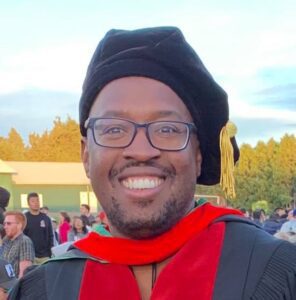
Podcast – Dr. Marcus Pimpleton, Chair of the LEV Board

In our Putting Students First podcast, we interview students, policymakers, partners, and thought leaders to spotlight education policies, research, and practices so that together we can create learning environments where every Washington student feels safe, supported, and a positive sense of belonging.

In this episode, League of Education Voters CEO Arik Korman interviews Dr. Marcus Pimpleton, Chair of the League of Education Voters (LEV) Board and Principal at Mariner High School in the Mukilteo School District, about how he bridges cultural divides, how he engages students as a leader, how to embed equity into Washington state’s K-12 system, what worked and what didn’t work in his own education journey, and how he would change Washington’s education system if he were in charge and there were no budgetary constraints.

Listen on Spotify, Apple Podcasts, Amazon Music, iHeartRadio, or Spreaker

Listen:

Read More

Podcast – Kelly Guilfoil, 2025 Regional Teacher of the Year

In our Putting Students First podcast, we interview students, policymakers, partners, and thought leaders to spotlight education policies, research, and practices so that together we can create learning environments where every Washington student feels safe, supported, and a positive sense of belonging.

In this episode, League of Education Voters CEO Arik Korman interviews Kelly Guilfoil from the Lake Stevens School District, one of eight 2025 Washington Regional Teachers of the Year, about how her students are doing in the wake of the national election, what worked and what didn’t work in her own education journey, and how she would change Washington state’s education system if she were in charge and there were no budgetary constraints.

Listen on Spotify, Apple Podcasts, Amazon Music, iHeartRadio, or Spreaker

Listen:

Read More

Thoughts on the Federal Election

By Eric Holzapfel

Chief Engagement Officer


I find myself in a state of déjà vu. Eight years ago, I stood in my office uncertain about what effects the federal election would have on the clients and community I served. At the time, I was in charge of an immigration program for LGBTQ+ Latinos at Entre Hermanos. Our clients expressed a great deal of fear around the anti-immigrant and mass deportation rhetoric coming from the Trump administration. Over the course of the Trump administration, many policies had dire effects on the clients we served but in turn were successfully defeated, specifically public charge and family separation. Public charge had a particularly detrimental effect on immigrant communities accessing public benefits. And family separation inhumanely, as I personally witnessed working with attorneys at a detention center in Laredo, separated thousands of children from their mothers and families. We also saw great victories on the state level to protect our immigrant communities, including Keep Washington Working (SB 5497) and a slew of successful legal challenges by then attorney general, Bob Ferguson. Read More

Empowering Students through Enhanced Financial Literacy

By Natalie So
Guest Blogger


Natalie, a current student at the International School in Bellevue, reflects on the impact financial literacy courses in school would have on her and her community.

Growing up, I often witnessed how a lack of financial knowledge could negatively impact people’s lives. This understanding deepened when I began volunteering with the Korean Adoptee Family Foundation (KORAFF), an organization dedicated to empowering Korean adoptee communities through education and advocacy. It was during my term serving as president of KORAFF that I truly grasped the transformative power of advocacy, no matter what age you are. I once believed that change could only be made from positions of power, but as I helped adoptees grow and flourish, I saw the significant impact that grassroots advocacy can have on making influential changes within society.
 

These experiences fueled my passion for addressing other systemic issues, such as the educational inequities within my school, where children with disabilities were often neglected due to a lack of funding and resources. Witnessing these challenges led me to passionately support House Bill 1915, which aims to make financial literacy education a mandatory part of the school curriculum. Read More

Podcast – Journalist Ebony Reed on the Black-White Wealth Gap

In our Putting Students First podcast, we interview students, policymakers, partners, and thought leaders to spotlight education policies, research, and practices so that together we can create learning environments where every Washington student feels safe, supported, and a positive sense of belonging.

Black-White wealth gapIn this episode, League of Education Voters CEO Arik Korman interviews Yale School of Management professor Ebony Reed, a seasoned journalist who is also the Chief Strategy Officer at The Marshall Project, a news outlet focused on the justice system, who discusses the intersection of race and money, how the current Black/white wealth gap compares to the gap after the Civil War, and how we should talk to our kids about wealth. Ebony’s new book, co-authored with Louise Story, is Fifteen Cents on the Dollar: How Americans Made the Black-White Wealth Gap.

Listen on Spotify, Apple Podcasts, Amazon Music, iHeartRadio, or Spreaker

Listen:

Read More

Podcast – Bill Dussault on Special Education Law and Next Steps

In our Putting Students First podcast, we interview students, policymakers, partners, and thought leaders to spotlight education policies, research, and practices so that together we can create learning environments where every Washington student feels safe, supported, and a positive sense of belonging.

In this episode, League of Education Voters CEO Arik Korman interviews game-changing disability rights attorney Bill Dussault, who discusses how Washington state’s special education law came to be, how Washington’s law impacted federal policy and the creation of the Individuals with Disabilities Education Act, what needs to happen next with Washington’s special education system, and what we in the community can do to help make the necessary changes happen.

Listen on Spotify, Apple Podcasts, Amazon Music, iHeartRadio, or Spreaker

Listen:

Read More

Podcast – Nana Kwame Adjei-Brenyah on the Power of Student Voice

In our Putting Students First podcast, we interview students, policymakers, partners, and thought leaders to spotlight education policies, research, and practices so that together we can create learning environments where every Washington student feels safe, supported, and a positive sense of belonging.

In this episode, League of Education Voters CEO Arik Korman interviews Nana Kwame Adjei-Brenyah, New York Times bestselling author and Adjunct Assistant Professor at Columbia University, who discusses whether you can be a fan of consumer sports like the NFL and still criticize them, how we can disrupt America’s systemic racism, unchecked capitalism, and mass incarceration, and why it’s important to value and respect the leadership of our youth.
Listen on Spotify, Apple Podcasts, Amazon Music, iHeartRadio, or Spreaker

Listen:

Read More

Washington Game Changers Podcast – Cindy Black of Fix Democracy First

Washington Game Changers with Lauri Hennessey features leaders who give back to our community, drive innovative solutions, and inspire others in making our state more equitable and just. This podcast is a one-on-one conversation with these powerful leaders in a time when we need to hear about more good in the world.
In this episode, League of Education Voters CEO Lauri Hennessey interviews Cindy Black, Executive Director of Fix Democracy First, an organization that is involved in everything from election reform to voter education for young people, from recruiting women to run for office to getting dark money out of politics.


Listen:

Listen on Spotify, Apple Podcasts, or Spreaker.

Watch:

Read More

Podcast – Washington state Teacher of the Year Nate Bowling on Civics and Student Engagement

In our Putting Students First podcast, we interview policymakers, partners, and thought leaders to spotlight education policies, research, and practices so that together we can create a brighter future for every Washington student.

In this episode, League of Education Voters Communications Director Arik Korman interviews Nate Bowling, the 2016 Washington state Teacher of the Year and National Teacher of the Year Finalist, about how to engage students during this time of political upheaval, how to help educators and administrators better engage families, and why it’s so important to participate in state and local elections.


Listen to Nate Bowling’s Nerd Farmer podcast

Read Nate Bowling’s Bowlings Abroad blog


Listen on Spotify, Apple Podcasts, or Spreaker

Listen:

Read More