2019-2021 Biennial Budget Side-By-Side
By League of Education Voters Policy Team
The Washington state Senate has released its 2019-2021 biennial budget proposal. See how it compares with the House and Governor Inslee’s budget proposal: Read More
By League of Education Voters Policy Team
The Washington state Senate has released its 2019-2021 biennial budget proposal. See how it compares with the House and Governor Inslee’s budget proposal: Read More
By League of Education Voters Policy Team
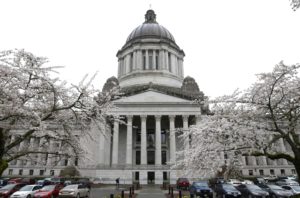 On March 20, Washington’s Economic and Revenue Forecast Council released their updated projections. The council expects the state to take in an additional $307 million in general fund revenue collections during the 2017-19 biennium than was projected when the biennial budget was adopted. Additionally, revenues are projected to be about $550 million higher for the general fund in the 2019-21 biennium than was previously projected. In total, an additional $850 million in expected to be available for the upcoming budget process than previously thought. Read More
 In our podcast, we interview policymakers, partners, and thought leaders to spotlight education policies, research, and practices so that together we can create a brighter future for every Washington student.
In this episode, League of Education Voters Communications Director Arik Korman asks Highline College student Chalisa Thompson how Highline’s Umoja Black Scholars Program has helped her, what went right and what went wrong in her educational journey, how she would change Washington’s education system, and how she envisions her future after she graduates.
Listen:
Visit our podcast page for more interviews
Read our 2019 Legislative Priority Issue Brief: Access to Postsecondary Opportunities Read More
By League of Education Voters Policy Team
We believe students come first. We are focused first and foremost on meeting the needs of every student.
We are dedicated to designing an equitable education system that serves all students based on their strengths, supports their needs, and provides the resources they need to be successful.
We are committed to working to close gaps experienced by historically and systemically underserved students— including students of color, students in poverty, students qualifying for special education services, students learning English, and students impacted by trauma. We believe this will lead to all students experiencing greater success and reaching their full potential.
 18,000 State Need Grant eligible students attending Washington higher education institutions are not currently receiving a State Need Grant because the program has not been fully funded by the legislature.
The legislature established the State Need Grant (SNG) fifty years ago to increase access to higher education for low-income students. Although the SNG annually funds almost 70,000 students, the underfunding of SNG left 18,000 eligible low-income students unserved in each of the last seven years.
Over ten years ago, Washington established the College Bound Scholarship that provides financial aid to students from income-eligible families who sign a pledge in middle school that they will earn a GPA of 2.0 or higher in high school and have no felony convictions (1).
Both programs cover a portion of the cost of attendance leaving students to cover the rest of the costs via family contributions, loans, or jobs. As of 2012, the average SNG award covered 12% to 35% of the cost of attendance. On average, students cover between 14% and 28% of the cost through loans with the rest of the costs of attendance being paid through other types of aid or family and/or student-generated sources. Read More
By League of Education Voters Policy Team
We believe students come first. We are focused first and foremost on meeting the needs of every student.
We are dedicated to designing an equitable education system that serves all students based on their strengths, supports their needs, and provides the resources they need to be successful.
We are committed to working to close gaps experienced by historically and systemically underserved students— including students of color, students in poverty, students qualifying for special education services, students learning English, and students impacted by trauma. We believe this will lead to all students experiencing greater success and reaching their full potential.
 Expanded learning opportunities – afterschool, weekend, or summer programming for school-age students – promote academic achievement, leadership skills, and involve youth in their communities. Unfortunately, youth from low income families get the least exposure to family reading time, weekend day trips, preschool, summer camp, and afterschool programming, compared to their peers from non-low income households (1). It adds up to a 6,000-hour learning gap by 6th grade – and only gets wider as they enter junior high and high school (2). This learning gap has an impact on school attendance and performance, as well as students’ opportunity to be fully prepared for college or career. Ability to access afterschool and summer school programs also impacts student safety, because the hours between 3 and 6pm are those in which youth are most susceptible to risky or adverse behaviors (3). Read More
By League of Education Voters Policy Team
We believe students come first. We are focused first and foremost on meeting the needs of every student.
We are dedicated to designing an equitable education system that serves all students based on their strengths, supports their needs, and provides the resources they need to be successful.
We are committed to working to close gaps experienced by historically and systemically underserved students— including students of color, students in poverty, students qualifying for special education services, students learning English, and students impacted by trauma. We believe this will lead to all students experiencing greater success and reaching their full potential.
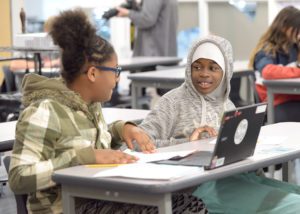 Students learn most effectively when their school feels safe, inclusive, supportive, and respectful (1). Creating positive school climates and providing student supports can mitigate the impact of trauma (2), mental health needs (3), and other non-academic factors that affect a student’s ability to engage in learning (4). It is instrumental in closing opportunity and achievement gaps in our system and improving student outcomes.
The creation of safe and supportive schools includes strategies such as Social-Emotional Learning (SEL), tiered systems of support, partnerships with families, partnerships with community-based organizations, and providing access to mental health services, among others. Between 50-80% of students in need of mental health services do not have access (5), and schools are likely the first point of access for many students that do seek services (6,7). School climate reform strategies have been shown to decrease school violence and bullying, increase academic achievement, and improve the school experience for students, staff, and families (8). The implementation of universal SEL programs have also been shown to result in significant academic gains (9,10) as well as a robust return on investment of $11 for every $1 spent (11). Read More
By League of Education Voters Policy Team
We believe students come first. We are focused first and foremost on meeting the needs of every student.
We are dedicated to designing an equitable education system that serves all students based on their strengths, supports their needs, and provides the resources they need to be successful.
We are committed to working to close gaps experienced by historically and systemically underserved students— including students of color, students in poverty, students qualifying for special education services, students learning English, and students impacted by trauma. We believe this will lead to all students experiencing greater success and reaching their full potential.
 In 2018, our state had a 30-point kindergarten readiness gap between kindergarteners from low income families and their non-low income peers. Kindergarten readiness is one variable that supports kids to do well in elementary school and beyond, and the income-based opportunity gap means that children from low income households will have more work to reach grade level than their peers.
Home visiting – an early childhood education strategy in which a nurse or other professional coordinates services to families in their home – is an intervention proven by four decades of research to significantly improve kindergarten readiness for children born to low income families. Improved educational outcomes also include higher grade point averages (GPAs), higher language scores, higher achievement scores at age nine, and even higher high school graduation rates (1). Expanding high-quality home visiting programs in Washington state not only allows us to maximize our K-12 investments – it also helps parents provide the nurturing kids need at just the right point in their lives. Home visiting improves physical and mental health and development (2), and decreases the likelihood of abuse or neglect (3) while improving family economic self-sufficiency (4). Twenty years of academic research confirms that home visiting can change the trajectory of a child and their entire family. Read More
By League of Education Voters Policy Team
We believe students come first. We are focused first and foremost on meeting the needs of every student.
We are dedicated to designing an equitable education system that serves all students based on their strengths, supports their needs, and provides the resources they need to be successful.
We are committed to working to close gaps experienced by historically and systemically underserved students— including students of color, students in poverty, students qualifying for special education services, students learning English, and students impacted by trauma. We believe this will lead to all students experiencing greater success and reaching their full potential.
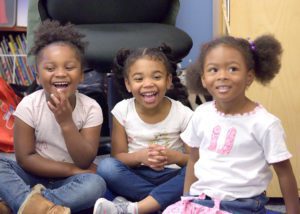 High-quality early childhood education can ensure that kids start school kindergarten ready, and increase test scores throughout their elementary and high school education (1). These benefits are particularly important for kids from low income families, who face more income-related stress and are more likely to have all parents working. Currently, only 33% of kindergarteners from low-income households enter school fully kindergarten ready – nearly half the rate of kindergarten readiness for their non-low income peers (2). Read More
By Lauryn Terry
Guest Blogger
 My name is Lauryn Terry and I am 14 years old from Olympia, WA. When I was 3, I was an ECEAP student. ECEAP, the Early Childhood Education and Assistance Program, taught me a lot of things. I remember being little and people not being able to understand me when I was talking. When I went to preschool, people there helped me to communicate better. I didn’t know it then, but I know now that they helped my mom get me the help I needed to get surgery on my ears, speech therapy, and to learn how to talk and make me able to hear.
I remember we went on a lot of cool educational field trips, to places like the Capitol and a fish hatchery. I also learned a lot about nature. We would have a lot of play time, but I didn’t realize I was actually learning at the same time. Teachers would read to us and sing songs, and I remember I really loved my preschool teacher. I really also liked the cool trikes and the outside time, even when it was raining – playing in the covered area was always fun. I think that’s where my love of nature began. Read More
By League of Education Voters Policy Team
We believe students come first. We are focused first and foremost on meeting the needs of every student.
We are dedicated to designing an equitable education system that serves all students based on their strengths, supports their needs, and provides the resources they need to be successful.
We are committed to working to close gaps experienced by historically and systemically underserved students— including students of color, students in poverty, students qualifying for special education services, students learning English, and students impacted by trauma. We believe this will lead to all students experiencing greater success and reaching their full potential.
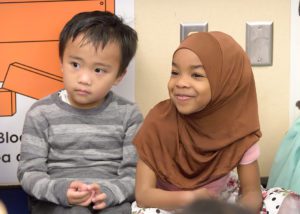 When Washington state five-year-olds arrive in kindergarten each year, they are beginning an educational journey on which some of them are already behind their classmates. Our state has a 30-point kindergarten readiness gap – only 31% of kindergarteners from low income families are fully school ready, compared to 60% of their non-low income peers (1).
To achieve readiness for all Washington children, some kids need more support, earlier. Washington has initiated a high-impact, research-proven early childhood education intervention program: the Early Childhood Education and Assistance Program (ECEAP) (2). Read More