2019 Legislative Priority: Special Education Funding
By League of Education Voters Policy Team
We believe students come first. We are focused first and foremost on meeting the needs of every student.
We are dedicated to designing an equitable education system that serves all students based on their strengths, supports their needs, and provides the resources they need to be successful.
We are committed to working to close gaps experienced by historically and systemically underserved students— including students of color, students in poverty, students qualifying for special education services, students learning English, and students impacted by trauma. We believe this will lead to all students experiencing greater success and reaching their full potential.
HOW DOES FUNDING FOR SPECIAL EDUCATION WORK IN WASHINGTON?
 Districts receive both state and federal funding to provide educational services and supports to students with disabilities, with state funding providing the biggest portion of funding. There are several factors that determine how much special education funding a district receives, but the two factors that most impact the level of state funding for special education for school districts are:
- Special Education Enrollment: Each student regardless of disability or type of service received will generate the same amount of funding per student for a single district, but districts are capped at generating special education funding for a maximum of 13.5% of overall student enrollment. For example, if a district has a special education enrollment of 15.0% they will only generate special education funding for 13.5% of students.
- District Teacher Salary Funding: The amount of funding each student generates differs by district and can vary by more than $1,000 per student across the state. There are several factors that go into each district’s per student funding amount, but the most significant is a district’s state-funded teacher salary amount. The higher a district’s state-funded teacher salary the more special education funding per student they will generate. (1)
 In our podcast, we interview policymakers, partners, and thought leaders to spotlight education policies, research, and practices so that together we can create a brighter future for every Washington student.
 With the passage of federal legislation in the 1970s, students with disabilities were guaranteed legal rights to access a public education that would accommodate their specific learning needs. Prior to guaranteeing the right to access education, it was common practice for students with disabilities to be actively excluded from public education settings. Federal legislation was intended to ensure that all students have the ability to access the public education system through the program of special education. (1)
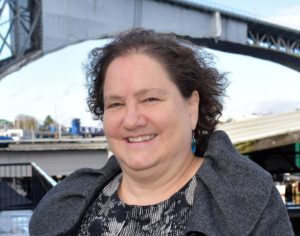 Laura Hitchcock comes to League of Education Voters as the Interim CEO from over 25 years in nonprofit and policy management. As a consultant, she has worked with Jan Glick & Associates to help strengthen organizational clients’ external, internal, and strategic focus, as well as provide strategic clarity to coalition and multi-organization initiatives, including facilitating the formation of the Early Learning Action Alliance.
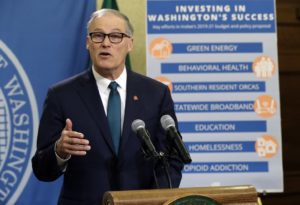 Governor Jay Inslee released his
 In our podcast, we interview policymakers, partners, and thought leaders to spotlight education policies, research, and practices so that together we can create a brighter future for every Washington student.
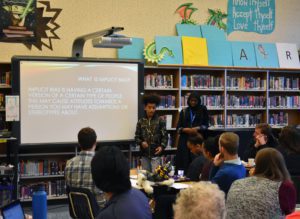 Last week, Trailblazers presented a professional development (PD) workshop on implicit bias for the entire educator staff at Washington Middle School, which was the first PD in the Seattle School District ever led by students. The session was led by Washington Middle School students Sona, an 8th-grader, and Kamilo (a.k.a. Bubbles), a 7th-grader. Sona and Kamilo told their personal stories and led discussions on what implicit bias is, which biases were in the room, why people have implicit bias, negative impacts of implicit bias, and solutions.